


This comprehensive guide explores every aspect of creating a successful branding and marketing strategy. You will learn actionable tactics, discover expert insights, compare top frameworks, and understand how to avoid costly errors, empowering you to build a highly profitable and recognizable business.
Building a memorable company requires a powerful branding and marketing strategy. A cohesive branding and marketing strategy connects your core values with targeted outreach to capture audience attention and drive sustainable revenue growth.
Understanding the Core of a Branding and Marketing Strategy
Developing a robust branding and marketing strategy requires you to understand the fundamental difference between who you are and how you communicate. Your brand represents your identity, your values, and the promise you make to your customers. Your marketing represents the tools and tactics you use to deliver that message to the right people. When you combine these elements into a unified branding and marketing strategy, you create a seamless customer experience that builds trust and drives sales.
A disjointed approach confuses customers. If your advertisements promise luxury but your website feels cheap, your branding and marketing strategy is failing. A successful branding and marketing strategy ensures that every touchpoint, from social media to packaging, reflects the exact same message. To dive deeper into establishing your identity, review our comprehensive brand voice development guide.
Companies that prioritize their branding and marketing strategy enjoy higher customer loyalty. People buy from brands they recognize and trust. By consistently applying your branding and marketing strategy, you reduce customer acquisition costs and increase the lifetime value of every buyer.
Why Your Business Needs a Unified Branding and Marketing Strategy

Many organizations treat branding and marketing as separate departments. This separation damages your overall branding and marketing strategy. When these teams work together, your branding and marketing strategy becomes a growth engine.
A unified branding and marketing strategy clarifies your market positioning. It tells your audience exactly why they should choose you over a competitor. Every blog post, email, and social update must align with your overarching branding and marketing strategy. According to research from the Harvard Business Review, consistent brand presentation across all platforms increases revenue by up to 23 percent.
Furthermore, a clear branding and marketing strategy makes internal decision-making easier. When you have a documented branding and marketing strategy, you know exactly which campaigns to fund and which to skip. This focus prevents wasted budget and ensures your branding and marketing strategy delivers the highest possible return on investment.
Step-by-Step Guide to Building Your Branding and Marketing Strategy
Creating an effective branding and marketing strategy does not happen by accident. Follow these steps to build a branding and marketing strategy that scales your business.
Define Your Target Audience
Your branding and marketing strategy must start with the customer. Identify exactly who needs your product. Understand their pain points, their desires, and where they spend their time online. A branding and marketing strategy built on detailed buyer personas outperforms generic campaigns every single time. Learn more about audience targeting in our customer retention techniques article.
Clarify Your Value Proposition
A strong branding and marketing strategy clearly articulates what makes you unique. Determine your unique selling proposition. Why are you different? Your branding and marketing strategy must highlight this difference in every piece of communication.
Choose the Right Channels
An effective branding and marketing strategy uses the channels where your audience actually hangs out. If you target professionals, your branding and marketing strategy should prioritize LinkedIn and email. If you target Gen Z, your branding and marketing strategy needs a heavy presence on TikTok and Instagram. Data from Statista shows that platform alignment directly impacts engagement rates.
Develop Consistent Messaging
Consistency fuels your branding and marketing strategy. Create a style guide that dictates your tone, vocabulary, and visual identity. Your branding and marketing strategy relies on this consistency to build mental real estate in your customer’s mind.
Execute and Analyze
Launch your campaigns according to your branding and marketing strategy. Then, track the data. A dynamic branding and marketing strategy requires constant optimization. Monitor your conversion rates and adjust your branding and marketing strategy based on what the analytics tell you.
Comparing Top Branding and Marketing Strategy Approaches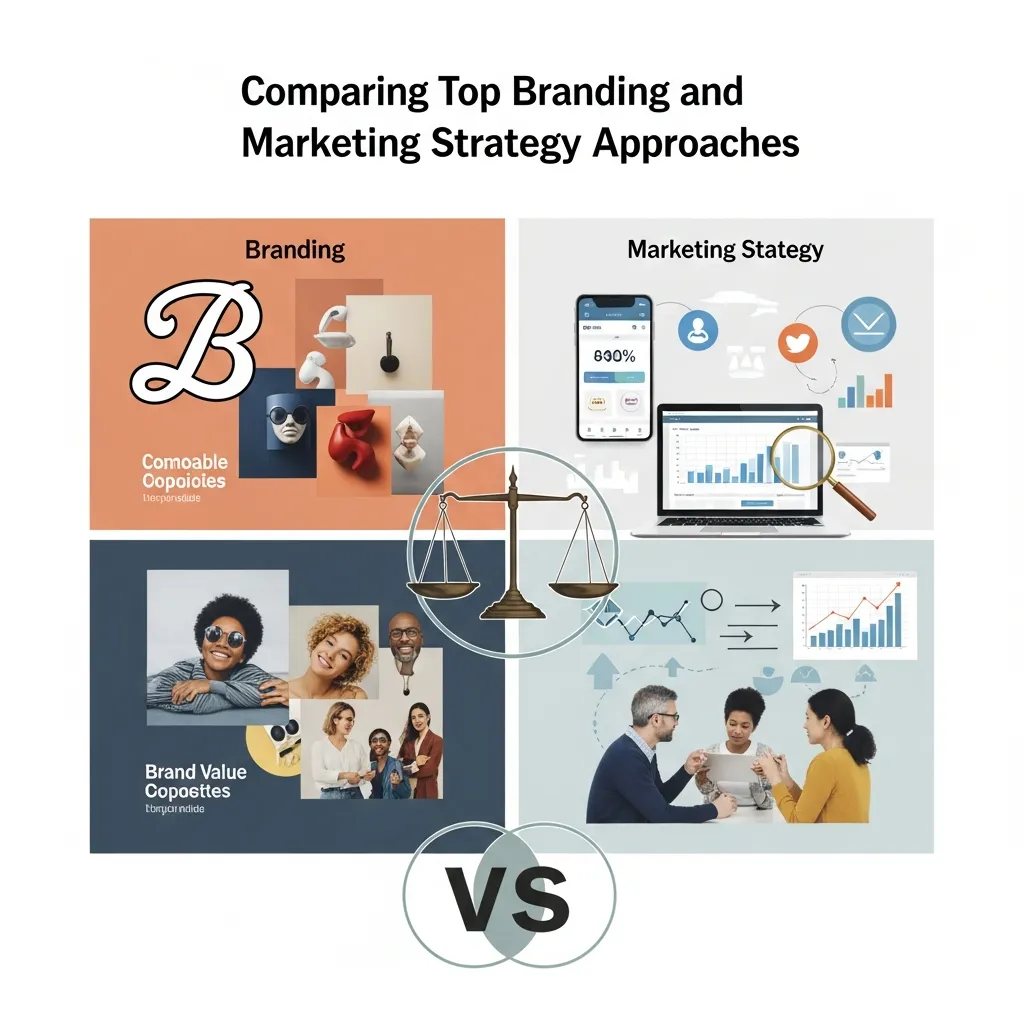
Different companies require different tactics. Here is a comparison of top frameworks to help you shape your branding and marketing strategy.
|
Strategy Type |
Best For |
Core Focus |
Key Benefit |
|---|---|---|---|
|
Content-Led Branding and Marketing Strategy |
B2B Companies |
Educational articles and SEO |
High authority and organic traffic |
|
Social-First Branding and Marketing Strategy |
D2C E-commerce |
Visual platforms and influencers |
Rapid brand awareness and viral growth |
|
Community-Based Branding and Marketing Strategy |
SaaS and Subscriptions |
Forums and user groups |
Extreme customer loyalty and low churn |
|
Omnichannel Branding and Marketing Strategy |
Enterprise Brands |
Seamless cross-platform experiences |
Maximum reach and total market saturation |
Selecting the right framework for your branding and marketing strategy depends on your budget, industry, and team capabilities. A well-chosen branding and marketing strategy framework accelerates your path to market dominance.
Expert Insights for Your Branding and Marketing Strategy
To elevate your branding and marketing strategy, you must think like a top-tier executive. Implement these expert insights to refine your branding and marketing strategy.
Focus on emotion rather than logic. A brilliant branding and marketing strategy taps into how a customer wants to feel. People buy transformations, not features. Your branding and marketing strategy must illustrate the better version of the customer’s life after using your product.
Prioritize agility within your branding and marketing strategy. The digital landscape shifts constantly. A rigid branding and marketing strategy will break. Allow room in your branding and marketing strategy to test new platforms and emerging trends. Read our content marketing guide to see how flexible content drives long-term success.
Leverage user-generated content. An authentic branding and marketing strategy highlights real customer stories. When your audience creates content for you, it serves as powerful social proof. Incorporating testimonials into your branding and marketing strategy builds immediate trust.
Common Mistakes to Avoid in Your Branding and Marketing Strategy
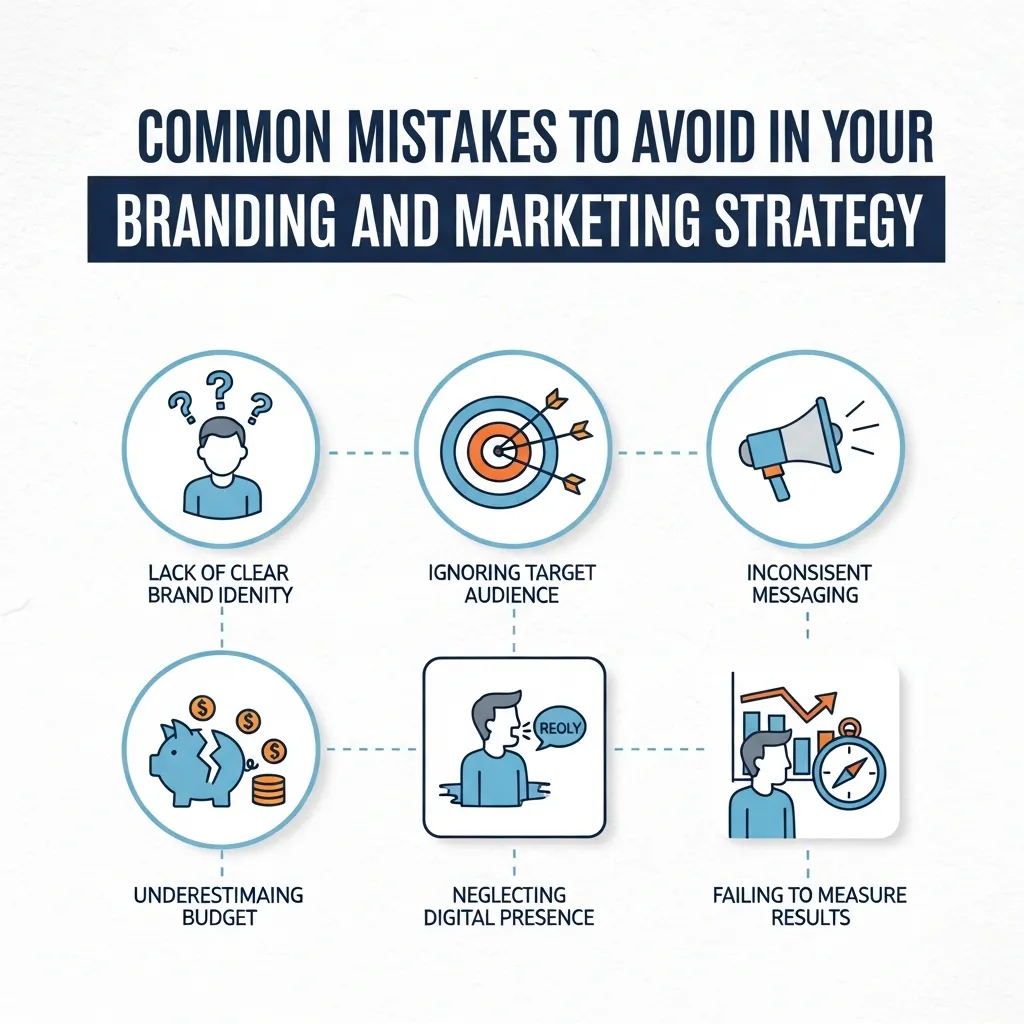
Even seasoned professionals stumble when executing a branding and marketing strategy. Avoiding these errors ensures your branding and marketing strategy remains effective.
First, copying your competitors ruins your branding and marketing strategy. If your branding and marketing strategy looks exactly like another company’s, you offer no reason for a customer to switch. Your branding and marketing strategy must carve out a unique position.
Second, neglecting mobile optimization damages your branding and marketing strategy. If your website fails on a smartphone, your audience will bounce. Your branding and marketing strategy must account for the mobile-first nature of modern consumers.
Third, falling victim to common sms marketing mistakes disrupts your overall branding and marketing strategy. Sending text blasts at inappropriate hours or failing to segment your list annoys customers. A sophisticated branding and marketing strategy ensures that SMS channels provide value, not spam. Every text message must reflect the high standards of your overarching branding and marketing strategy.
Finally, failing to track metrics destroys your branding and marketing strategy. If you do not know which campaigns drive revenue, you cannot scale. Your branding and marketing strategy must include rigid key performance indicators. The experts at HubSpot consistently emphasize that data-driven marketing outperforms gut feelings.
Integrating Digital PR into Your Branding and Marketing Strategy
Digital public relations plays a massive role in a modern branding and marketing strategy. Getting featured in major publications validates your branding and marketing strategy to the public.
When you secure press coverage, you amplify your branding and marketing strategy. A single article in a respected journal can drive thousands of targeted visitors to your site. This exposure solidifies the authority of your branding and marketing strategy.
To integrate PR into your branding and marketing strategy, pitch stories about your company’s unique data or innovative culture. Journalists want compelling narratives. When your branding and marketing strategy includes a strong PR arm, you build an impenetrable moat around your business.
Scaling Your Branding and Marketing Strategy
As your company grows, your branding and marketing strategy must evolve. What worked for your first hundred customers will not work for your next ten thousand. A scalable branding and marketing strategy requires automation and delegation.
Invest in software that supports your branding and marketing strategy. Customer relationship management tools help you segment audiences and personalize outreach. A technology-backed branding and marketing strategy allows you to maintain a personal touch at scale.
Hire specialists to execute specific pillars of your branding and marketing strategy. Bring in SEO experts, copywriters, and paid media managers. A collaborative team ensures every facet of your branding and marketing strategy operates at the highest possible level.
Conclusion
Mastering your branding and marketing strategy transforms your business from a hidden gem into an industry powerhouse. By clearly defining your audience, delivering consistent messaging, and avoiding common pitfalls, your branding and marketing strategy will drive unmatched growth. Start auditing your current campaigns today and build a branding and marketing strategy that guarantees long-term success.
FAQs
What is a branding and marketing strategy?
A branding and marketing strategy is a comprehensive plan that combines your company’s identity and values with the specific tactics used to promote your products to your target audience.
Why is a branding and marketing strategy important?
A cohesive branding and marketing strategy builds customer trust, differentiates you from competitors, and ensures that all your promotional efforts drive measurable revenue growth.
How do I start building a branding and marketing strategy?
Begin your branding and marketing strategy by conducting deep market research to define your buyer personas. Then, establish your unique value proposition and select the most effective channels to reach your audience.
Can a small business afford a branding and marketing strategy?
Yes. A branding and marketing strategy does not require a massive budget. Small businesses can execute a highly effective branding and marketing strategy focusing on organic social media, content creation, and community building.
What are the main components of a branding and marketing strategy?
The core components of a branding and marketing strategy include brand positioning, visual identity, messaging guidelines, channel selection, and measurable key performance indicators.
How often should I update my branding and marketing strategy?
You should review your branding and marketing strategy quarterly and do a deep overhaul annually. A dynamic branding and marketing strategy adapts to new market trends and shifting consumer behaviors.
How do common sms marketing mistakes affect a branding and marketing strategy?
Common sms marketing mistakes, like sending spammy or unsegmented texts, break customer trust. This directly damages your branding and marketing strategy by making your company appear unprofessional and intrusive.
How do I measure the success of my branding and marketing strategy?
Measure your branding and marketing strategy using metrics like customer acquisition cost, conversion rates, website traffic, social engagement, and overall return on investment.
What is the difference between branding and marketing in my branding and marketing strategy?
Branding is who you are and why you exist. Marketing is how you communicate that identity to drive sales. Your branding and marketing strategy unifies both concepts into one seamless plan.
Should I hire an agency to run my branding and marketing strategy?
Hiring an agency can accelerate your branding and marketing strategy if you lack internal expertise. However, the founders must remain heavily involved to ensure the branding and marketing strategy authentically reflects the company’s vision.
