

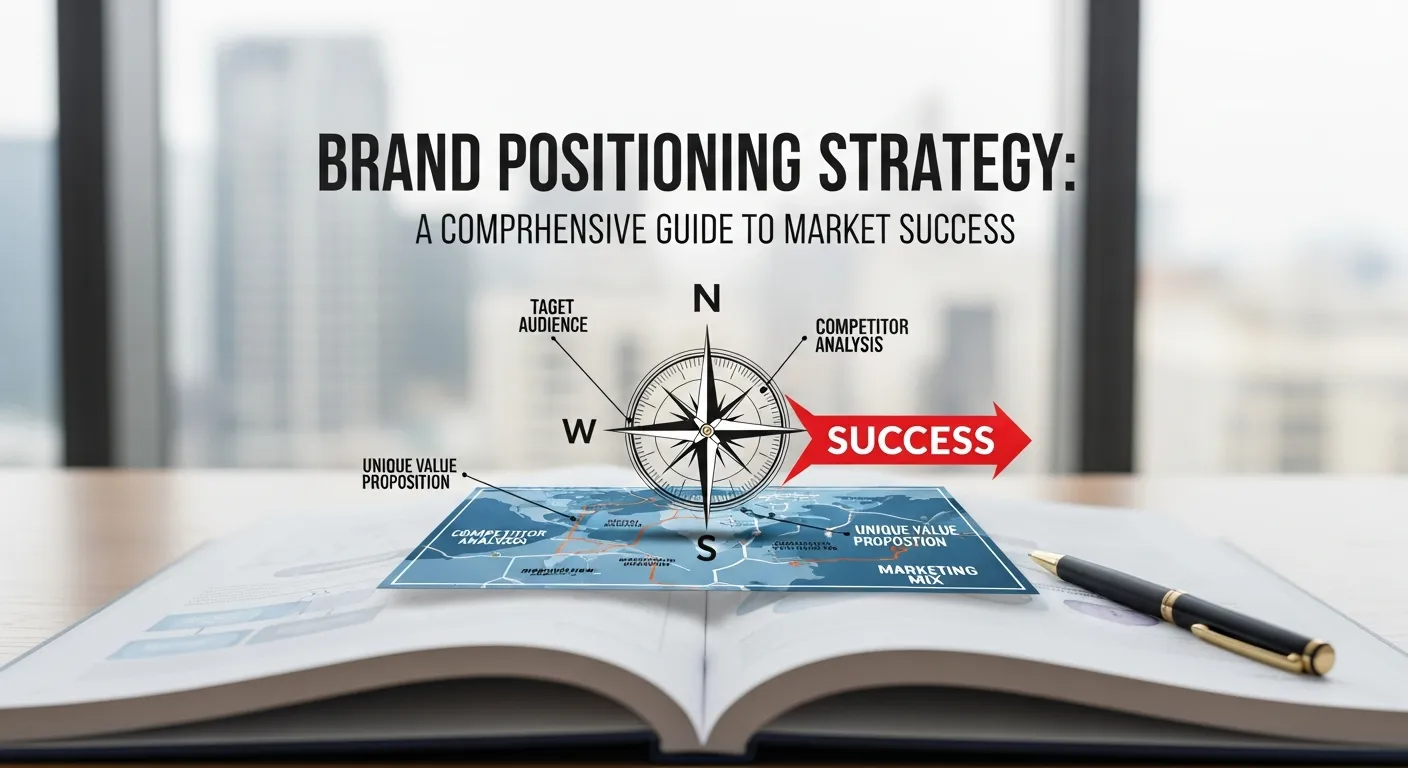
This comprehensive guide explores exactly how to build a high-converting brand positioning strategy. You will learn core principles, explore real-world examples, avoid common pitfalls, and master a step-by-step framework to elevate your market presence and capture your ideal audience’s loyalty.
Are you struggling to stand out? A strong brand positioning strategy commands attention, builds unwavering trust, and drives explosive growth in any highly competitive market.
Understanding the Brand Positioning Strategy
A brand positioning strategy represents the deliberate process of establishing your company’s unique value in the minds of your consumers. It defines what your business stands for, why it matters, and how it differs from every other option available. When you execute this correctly, your audience immediately understands why they should choose you over a competitor.
Businesses cannot survive on product features alone. Consumers crave emotional connections, clear solutions, and distinct identities. A calculated brand positioning strategy gives your audience a compelling reason to care about your offerings. It serves as the foundation for your brand identity and dictates how your team communicates across all platforms.
If you fail to position yourself, the market will position you instead. This often results in consumers viewing your business as a generic commodity. Taking control of your narrative allows you to dictate your perceived value, command premium pricing, and foster fierce brand loyalty.
Mini-Conclusion: Securing a specific place in your consumer’s mind guarantees that your business remains relevant, memorable, and profitable.
The Core Elements of Market Positioning
To create a dominant brand positioning strategy, you must first understand its foundational pillars. These elements work together to build a cohesive and persuasive market presence.
The Target Audience
You cannot appeal to everyone. A successful brand positioning strategy requires a deep understanding of your specific target audience. You must identify their pain points, desires, purchasing habits, and emotional triggers. When you know exactly who you serve, you can tailor your messaging to speak directly to their unique needs.
The Unique Value Proposition
Your value proposition forms the beating heart of your brand positioning strategy. It clearly articulates the specific problem you solve and the unique benefit you deliver. This proposition must be entirely authentic, highly relevant, and difficult for competitors to replicate.
The Brand Promise
Your brand promise sets expectations. It tells your consumers exactly what they will experience every time they interact with your business. A strong brand positioning strategy ensures that your company consistently fulfills this promise, thereby building unshakable trust and long-term loyalty.
Mini-Conclusion: Mastering these three pillars ensures your brand communicates with razor-sharp clarity and irresistible appeal.
Types of Brand Positioning Strategies

Different businesses require different approaches. Choosing the right framework for your brand positioning strategy depends on your industry, your audience, and your unique capabilities.
Quality-Based Positioning
Many companies build their brand positioning strategy around superior quality. They emphasize premium materials, exceptional craftsmanship, and rigorous testing. This approach attracts discerning consumers who willingly pay higher prices for luxury, durability, and prestige. Rolex and Apple execute this strategy flawlessly.
Price-Based Positioning
A price-based brand positioning strategy targets budget-conscious consumers. You position your brand as the most affordable and accessible option on the market. While this drives massive volume, it requires highly efficient operations to maintain profitability. Walmart and Southwest Airlines dominate their sectors using this exact approach.
Customer Service Positioning
Some brands differentiate themselves through exceptional support. A customer service-focused brand positioning strategy promises a frictionless, deeply supportive experience. This works exceptionally well in B2B markets and software industries. Companies like Zappos and Chewy built empires by prioritizing consumer happiness above all else.
Convenience-Based Positioning
Consumers love ease. A convenience-based brand positioning strategy highlights speed, accessibility, and simplicity. You promise to save your customers time and effort. Amazon transformed global retail by promising unmatched convenience and lightning-fast delivery.
Problem-Solution Positioning
This brand positioning strategy focuses intensely on a highly specific customer pain point. You position your product as the ultimate cure for a frustrating problem. This works beautifully for niche markets and innovative startups introducing entirely new concepts to the public.
Mini-Conclusion: Selecting the correct angle allows you to highlight your greatest strengths and immediately capture your ideal buyer’s attention.
Step-by-Step Guide to Building Your Brand Positioning Strategy
Creating a winning brand positioning strategy requires meticulous research, deep introspection, and decisive action. Follow this step-by-step framework to define your market space and outshine your competitors.
Step 1: Analyze Your Current Market Position
Before you decide where you want to go, you must understand where you currently stand. Analyze how consumers currently perceive your business. Send out customer surveys, read online reviews, and speak directly with your sales team. Identify what your audience loves about you and where you currently fall short. This honest assessment forms the baseline of your new brand positioning strategy.
Step 2: Research Your Competitors Thoroughly
You cannot stand out if you do not know what you are standing against. Identify your top five competitors. Analyze their messaging, their pricing models, and their customer reviews. Look for gaps in their offerings. If every competitor focuses on low prices, you might find a massive opportunity by pivoting your brand positioning strategy toward premium quality or unmatched customer service. According to research from Harvard Business Review, finding white space in a crowded market remains the fastest path to profitability.
Step 3: Define Your Target Buyer Persona
You must know your ideal customer intimately. Create a detailed buyer persona that outlines their age, income, job title, and daily challenges. Dig deep into their psychological motivations. What keeps them awake at night? What solutions have they tried in the past? A highly targeted brand positioning strategy speaks directly to these emotional and practical needs.
Step 4: Uncover Your Unique Differentiator
What makes you truly different? It cannot be something generic like “we care about our customers.” You need a tangible, provable differentiator. Perhaps you use patented technology, offer an ironclad money-back guarantee, or provide exclusive access to industry experts. Pinpoint the one thing you do better than anyone else. This differentiator anchors your entire brand positioning strategy.
Step 5: Write Your Positioning Statement
A positioning statement is an internal document that aligns your entire team. It clearly defines who you serve, what you offer, and why you are different. Use this simple template: “For [Target Audience] who [Need/Pain Point], [Your Brand] provides [Main Benefit] because [Unique Differentiator].” Keep it concise, powerful, and easy to remember. Every future marketing decision must align with this statement.
Step 6: Test Your Messaging
Never launch a new brand positioning strategy blindly. Test your new messaging with a small segment of your audience. Run A/B tests on your landing pages, send out targeted email campaigns, and monitor the engagement metrics. Listen closely to the feedback. If the message resonates, scale it up. If it falls flat, refine your language until it hits the mark.
Step 7: Implement Across All Channels
Your brand positioning strategy must remain consistent across every touchpoint. Update your website copy, redesign your social media profiles, and retrain your sales team. Consistency breeds familiarity, and familiarity breeds trust. Ensure that your marketing campaigns project the exact same values, tone, and promises everywhere your audience interacts with you.
Mini-Conclusion: Executing these seven steps guarantees that your business presents a unified, highly persuasive face to the entire market.
Brand Positioning vs. Marketing Strategy
Many business owners confuse these two critical concepts. Understanding the distinction helps you allocate your resources effectively.
|
Feature |
Brand Positioning Strategy |
Marketing Strategy |
|---|---|---|
|
Core Purpose |
Defines who you are and why you matter. |
Defines how you will reach your audience. |
|
Timeframe |
Long-term and foundational. |
Short-term, tactical, and campaign-based. |
|
Focus Area |
Customer perception and psychological impact. |
Channels, budgets, leads, and conversions. |
|
Flexibility |
Rarely changes unless the company pivots. |
Changes frequently based on market trends. |
Your brand positioning strategy acts as the compass. Your marketing strategy acts as the vehicle that moves you in that direction. You absolutely must define your positioning before you spend a single dollar on marketing.
Mini-Conclusion: Solidifying your position first ensures that your marketing dollars generate maximum return on investment.
Real-World Examples of High-Impact Positioning
Studying successful companies provides massive inspiration for your own efforts. Let us examine how global titans leverage their brand positioning strategy to dominate their respective industries.
Apple: The Premium Innovator
Apple executes a masterful brand positioning strategy based on quality, innovation, and status. They do not compete on price. Instead, they position their products as beautiful, user-friendly lifestyle enhancements. When consumers buy Apple, they purchase a feeling of exclusivity and cutting-edge design.
Tesla: Sustainable Luxury
Before Tesla, the market viewed electric cars as slow, ugly, and impractical. Tesla revolutionized the automotive industry by deploying a brand positioning strategy focused on thrilling performance and sustainable luxury. They proved that eco-friendly vehicles could be incredibly fast and highly desirable.
Slack: Seamless Collaboration
Slack entered a crowded market of communication tools. They succeeded through a brilliant brand positioning strategy that promised to replace the dreadful experience of corporate email. They positioned themselves as the fun, intuitive, and seamless hub for modern team collaboration. Their vibrant branding and conversational tone perfectly matched this unique position.
Mini-Conclusion: These titans prove that a highly specific, passionately executed position leads directly to industry dominance.
Common Mistakes to Avoid
Even seasoned marketers make errors when developing their brand positioning strategy. Avoid these disastrous pitfalls to protect your brand equity.
- Trying to Appeal to Everyone: When you try to be everything to everyone, you end up meaning nothing to anyone. Narrow your focus. Embrace your specific niche and ignore the rest of the market.
- Creating Unprovable Claims: Never claim to be “the best” or “the fastest” unless you possess hard data to prove it. Consumers spot empty marketing jargon instantly. Back up your brand positioning strategy with statistics, case studies, and real testimonials.
- Ignoring Competitor Moves: Markets evolve constantly. If a competitor copies your exact positioning, you lose your unique edge. Continuously monitor your industry and refine your brand positioning strategy to maintain your distinctive flair.
- Failing to Train Your Team: Your marketing department might understand your positioning perfectly, but if your customer service agents sound entirely disconnected, your brand breaks down. Train every single employee on your core messaging.
Expert Insights and Pro Tips
Elevate your brand positioning strategy by applying these advanced tactics used by top marketing executives.
- Leverage Emotional Triggers: Logic justifies a purchase, but emotion drives it. Find the emotional core of your customer’s problem. Do they want to feel secure, powerful, or relaxed? Weave these emotional triggers deeply into your brand positioning strategy.
- Focus on the Transformation: Stop talking about your features. Nobody cares about the technical specs of your software. They care about how your software makes their workday shorter and less stressful. Position your brand around the incredible transformation you provide.
- Stay Ruthlessly Consistent: Consistency is the ultimate growth hack. Use the exact same colors, the exact same tone of voice, and the exact same core messages for years. As noted by Forbes, relentless consistency increases revenue by up to 23%.
Developing a powerful brand positioning strategy is the most profitable investment you can make in your business. It clarifies your message, differentiates you from fierce competitors, and deeply resonates with your ideal buyers. Stop blending in with the crowd. Take decisive action today, define your unique value, implement your brand positioning strategy relentlessly, and watch your business dominate the market!
Frequently Asked Questions
What is a brand positioning strategy?
It is a systematic approach to defining how you want consumers to perceive your business. It highlights your unique value, differentiates you from competitors, and secures a specific place in the minds of your target audience.
Why is a brand positioning strategy so important?
It cuts through market noise. Without it, consumers view you as a generic commodity. A strong strategy builds trust, justifies premium pricing, and creates intense customer loyalty by clearly explaining why your business matters.
How do I find my unique value proposition?
Analyze your strengths, research competitor weaknesses, and listen closely to your customers. Find the specific intersection where what you do best meets what your target audience desires most. That intersection is your unique value proposition.
Can my brand positioning strategy change over time?
Yes, but you should only change it strategically. If market conditions shift drastically, new technologies emerge, or your target audience evolves, you must undergo a strategic rebranding process to remain relevant and competitive.
What is a brand positioning statement?
It is a concise internal document that aligns your team. It defines your target audience, their core need, the specific solution you provide, and the distinct reason why your business does it better than anyone else.
How do I know if my brand positioning strategy is working?
You will see clear indicators. Sales cycles will shorten, customer retention will increase, and your marketing campaigns will generate higher conversion rates. Additionally, customers will describe your brand using the exact words you want them to use.
What role does pricing play in positioning?
Pricing serves as a massive psychological signal. High prices communicate luxury, exclusivity, and premium quality. Low prices communicate accessibility and budget-friendly convenience. Your pricing must perfectly align with your overall brand promises.
Is a brand positioning strategy only for large corporations?
Absolutely not. Small businesses and startups need it even more. Because small businesses lack massive advertising budgets, a razor-sharp position helps them capture hyper-specific niches and compete effectively against massive, generalized corporations.
How does positioning affect content marketing?
It dictates every word you write. Your positioning determines your brand voice, the topics you cover, and the platforms you use. It ensures that every blog post, video, and social media update reinforces your unique market identity.
What happens if I copy a competitor’s positioning?
You will fail. Copying a competitor makes you a cheap imitation. Consumers will always choose the original over the copycat. You must dig deep to find an angle, a feature, or an emotional connection that belongs exclusively to your business.
