

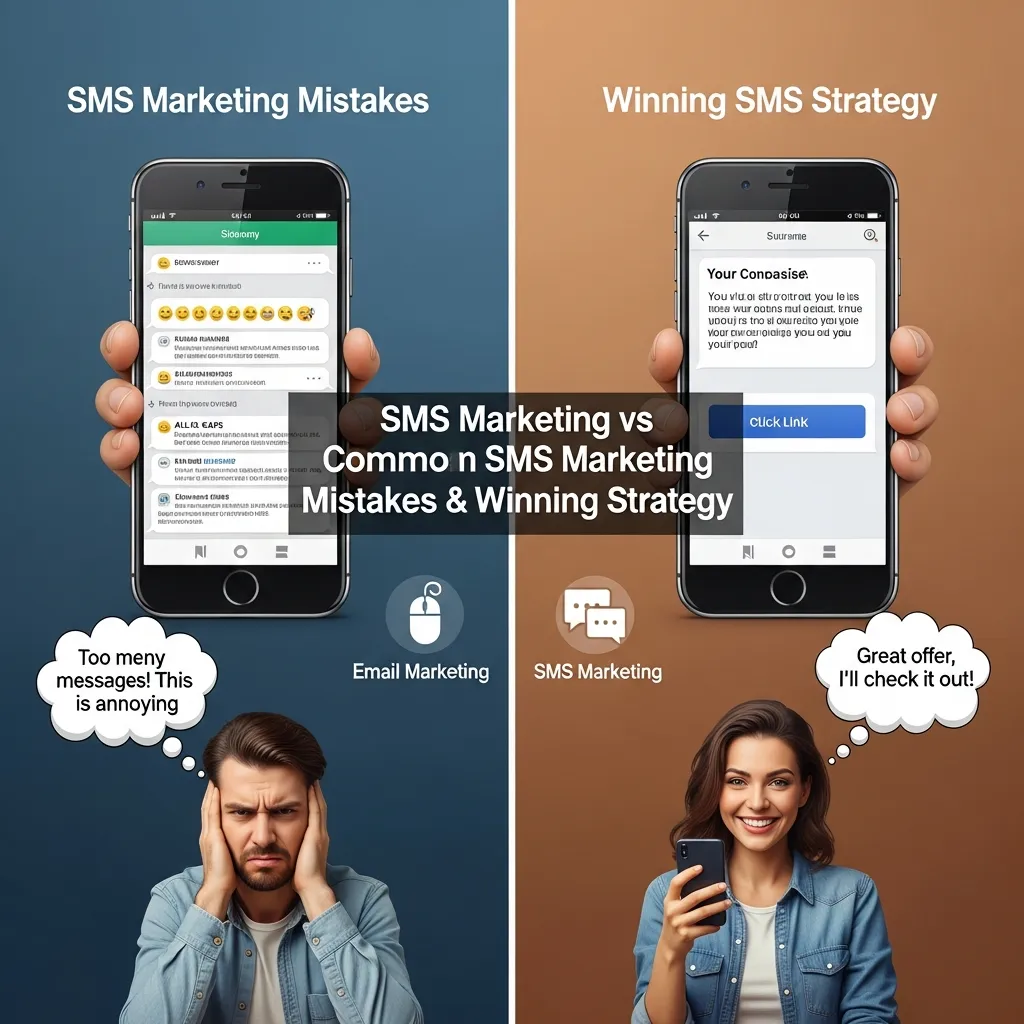
This guide explores sms marketing vs email marketing, how top brands use both channels, and why common sms marketing mistakes lead to poor ROI. You’ll learn expert strategies, comparisons, compliance rules, and optimization techniques to build high-performing campaigns that convert and scale effectively.
Understanding sms marketing vs email marketing is crucial, especially when common sms marketing mistakes reduce engagement, conversions, and long-term customer trust.
Understanding SMS Marketing vs Email Marketing (Competitive Landscape Insight)
Before analyzing sms marketing vs email marketing performance, it’s important to understand how top-ranking blogs like HubSpot, Mailchimp, and Twilio structure their content.
Most authoritative sources follow this pattern:
- Clear channel comparison frameworks
- Data-driven conversion statistics
- Use-case segmentation (B2B vs B2C)
- Compliance and deliverability insights
- Actionable optimization tips
For example:
- HubSpot Marketing Blog focuses heavily on inbound strategy alignment
- Mailchimp Email Marketing Platform emphasizes lifecycle automation and segmentation
- Twilio highlights API-driven SMS scalability and deliverability
However, most competitors fail in one major area: they do not deeply address common sms marketing mistakes in a practical, business-ready format. This is where this guide provides deeper value.
sms marketing vs email marketing: Core Differences Explained
Channel Nature Comparison
| Feature | SMS Marketing | Email Marketing |
|---|---|---|
| Open Rate | 95–98% | 20–35% |
| Response Time | Minutes | Hours/Days |
| Content Length | Very Short | Long-form |
| Cost | Higher per message | Low cost |
| Personalization | High | Very High |
| Ideal Use | Urgent updates | Content marketing |
Email marketing excels in storytelling, while SMS dominates immediacy and engagement speed.
However, success in both channels depends heavily on avoiding common sms marketing mistakes that reduce trust and engagement.
Why SMS Marketing Still Wins in 2026
Despite the rise of email automation tools, SMS remains one of the most powerful direct communication channels.
Reasons include:
- Near-instant delivery
- Higher engagement rates
- Mobile-first user behavior
- Better visibility than email inboxes
According to research from Twilio, SMS campaigns consistently outperform email in time-sensitive promotions and transactional messaging.
But success is not guaranteed—because many brands repeat common sms marketing mistakes that damage performance.
The Hidden Cost of common sms marketing mistakes
Most businesses assume SMS marketing is simple: send message → get conversion.
In reality, SMS success depends on precision.
The most damaging common sms marketing mistakes include:
- Over-messaging users
- Ignoring consent compliance
- Poor segmentation
- Weak call-to-action (CTA)
- Irrelevant messaging timing
These mistakes reduce trust, increase opt-outs, and lower ROI significantly.
Deep Dive: common sms marketing mistakes That Kill ROI 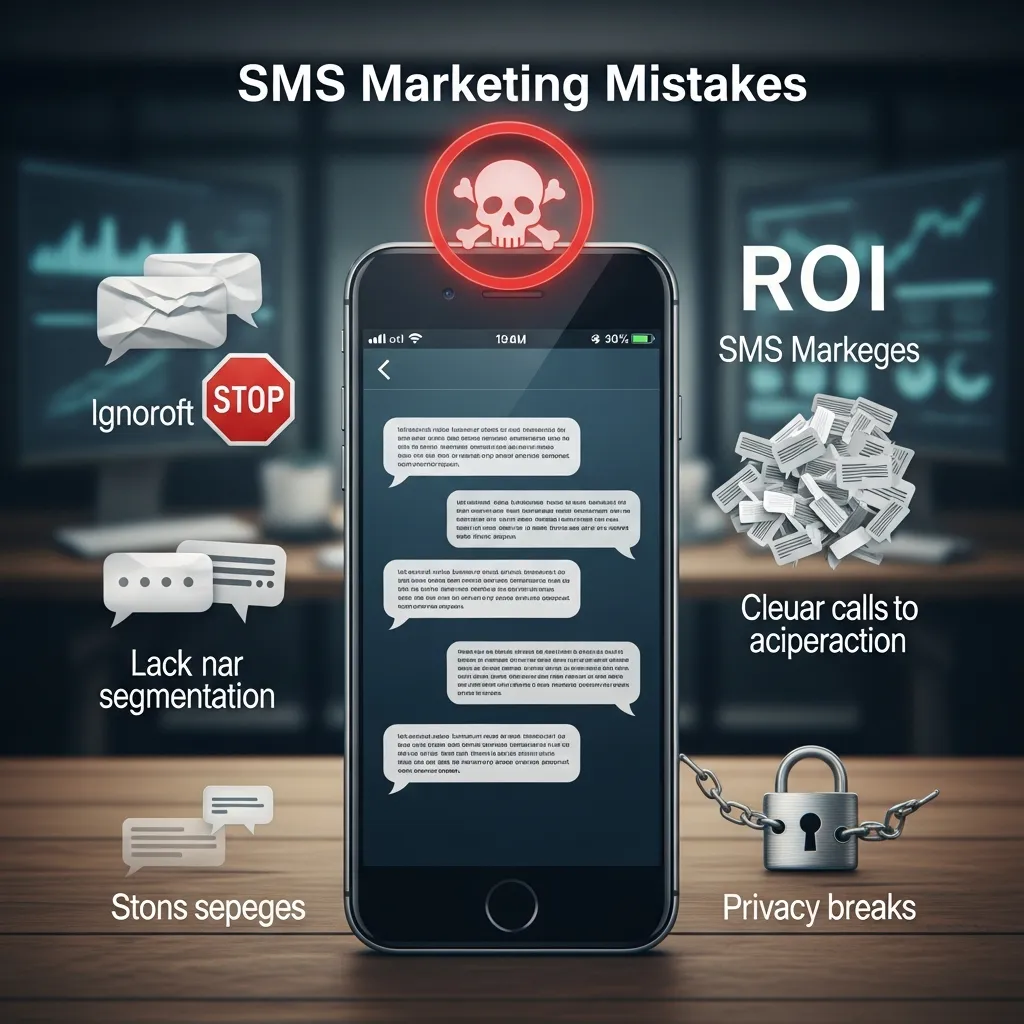
1. Ignoring User Consent (Biggest Compliance Risk)
One of the most critical common sms marketing mistakes is sending messages without proper opt-in consent.
This leads to:
- Legal penalties
- Carrier filtering
- Brand trust loss
Refer to compliance guidelines from Federal Trade Commission for SMS permission rules.
2. Sending Generic Messages (No Personalization)
Modern users expect personalization.
Yet many brands still send:
“Big sale today! Click here.”
This is a classic example of common sms marketing mistakes that ignore user behavior data.
Better approach:
- Use name personalization
- Segment based on purchase behavior
- Trigger event-based messages
3. Poor Timing Strategy
Sending SMS at the wrong time is a silent conversion killer.
Examples of bad timing:
- Late-night promotions
- Early morning spam messages
- Random bulk blasts
Top-performing brands use behavioral timing based on:
- Time zones
- Purchase history
- Engagement patterns
4. Overloading Users with Messages
Frequency imbalance is one of the most damaging common sms marketing mistakes.
Too many messages lead to:
- Opt-outs
- Spam complaints
- Brand fatigue
Best practice:
- 2–4 SMS per week (maximum for most industries)
5. Weak or Missing CTA
SMS without a clear CTA is wasted potential.
Bad example:
“Check our new offers.”
Good example:
“Shop now and get 20% off today: [link]”
6. Not Integrating SMS with Email Marketing
Ignoring sms marketing vs email marketing synergy is a missed opportunity.
High-performing brands combine both:
- Email for storytelling
- SMS for urgency
7. Poor List Segmentation
Sending the same message to all users is one of the most expensive common sms marketing mistakes.
Segmentation types:
- New subscribers
- Active buyers
- Dormant users
- High-value customers
SMS Marketing vs Email Marketing Strategy Framework
When to Use SMS Marketing
- Flash sales
- Appointment reminders
- OTP verification
- Urgent alerts
When to Use Email Marketing
- Newsletters
- Educational content
- Product launches
- Long-form storytelling
Hybrid Strategy (Best Approach)
Top marketers from HubSpot Marketing Blog recommend combining both channels for lifecycle marketing.
Example funnel:
- Email introduces product
- SMS triggers urgency
- Email follows up with content
Advanced Optimization Techniques
Behavioral Triggering
Automate SMS based on:
- Cart abandonment
- Page visits
- Purchase frequency
AI-Powered Timing
AI tools predict best send times based on engagement history.
A/B Testing
Test:
- CTA formats
- Message length
- Timing windows
Common Mistakes to Avoid in Strategy Execution
Here is a focused breakdown of common sms marketing mistakes that marketers repeatedly make:
- Ignoring compliance frameworks
- Using long, unclear SMS messages
- Not tracking conversion attribution
- Sending messages without segmentation
- Failing to optimize landing pages
These mistakes directly reduce ROI even in well-funded campaigns.
Pro Tips for High-Converting SMS Campaigns
- Keep messages under 160 characters
- Always include a clear CTA
- Use urgency sparingly but effectively
- Align SMS with customer journey stages
- Integrate with CRM systems
SMS vs Email Performance Psychology
SMS works on urgency psychology:
- Fear of missing out (FOMO)
- Instant gratification
- Direct attention capture
Email works on:
- Information depth
- Trust building
- Long-term engagement
Understanding this difference helps reduce common sms marketing mistakes caused by misaligned messaging strategy.
Comparison: Conversion Behavior
| Metric | SMS | |
|---|---|---|
| CTR | High | Medium |
| Engagement Speed | Immediate | Delayed |
| Conversion Rate | Higher for urgency | Higher for nurturing |
Industry Use Cases
E-commerce
- SMS: flash discounts
- Email: product storytelling
SaaS
- SMS: trial reminders
- Email: onboarding sequences
Healthcare
- SMS: appointment alerts
- Email: reports and education
Expert Insights
Experts from Twilio emphasize that SMS works best when:
- Time-sensitive
- Highly relevant
- Behavior-triggered
Meanwhile, Mailchimp Email Marketing Platform highlights email as the backbone of long-term customer nurturing.
Internal Knowledge Clusters
- SMS Marketing Guide helps build foundational knowledge of messaging systems
- Email Marketing Strategies improves nurturing and retention campaigns
- SMS Compliance Guide ensures legal-safe communication practices
- Customer Segmentation Techniques enhances targeting accuracy
These clusters help eliminate common sms marketing mistakes by improving structural campaign design.
External References
- https://www.twilio.com/docs/sms
- https://mailchimp.com/resources/email-marketing-field-guide/
- https://blog.hubspot.com/marketing/sms-marketing
- https://www.ftc.gov/business-guidance/resources/can-spam-act-compliance-guide
Conclusion (50–60 words)
Mastering sms marketing vs email marketing requires understanding strengths, limitations, and avoiding common sms marketing mistakes that damage performance. When combined strategically, both channels drive exceptional ROI. Focus on personalization, compliance, and timing to scale effectively. Start optimizing your campaigns today for higher conversions and sustainable growth.
FAQs
1. What is sms marketing vs email marketing?
SMS marketing uses text messages for direct communication, while email marketing uses inbox-based messaging for detailed content delivery and nurturing.
2. Why is SMS marketing more effective sometimes?
SMS has higher open rates and faster response times, making it ideal for urgent promotions and alerts.
3. What are common sms marketing mistakes businesses make?
They include poor segmentation, lack of consent, over-messaging, and weak CTAs.
4. Is SMS marketing better than email marketing?
Neither is universally better; SMS is best for urgency, email is best for long-term engagement.
5. How often should SMS campaigns be sent?
Typically 2–4 messages per week depending on industry and user engagement.
6. What tools help with SMS marketing?
Platforms like Twilio and CRM integrations help automate campaigns.
7. How does email marketing support SMS campaigns?
Email builds trust and education, while SMS drives immediate action.
8. What is the biggest SMS marketing mistake?
Sending messages without user consent is the most critical and legally risky mistake.
9. Can SMS and email be used together?
Yes, integrated campaigns significantly improve conversion rates and engagement.
10. How do I avoid common sms marketing mistakes?
Use segmentation, personalization, compliance rules, A/B testing, and proper timing strategies.
